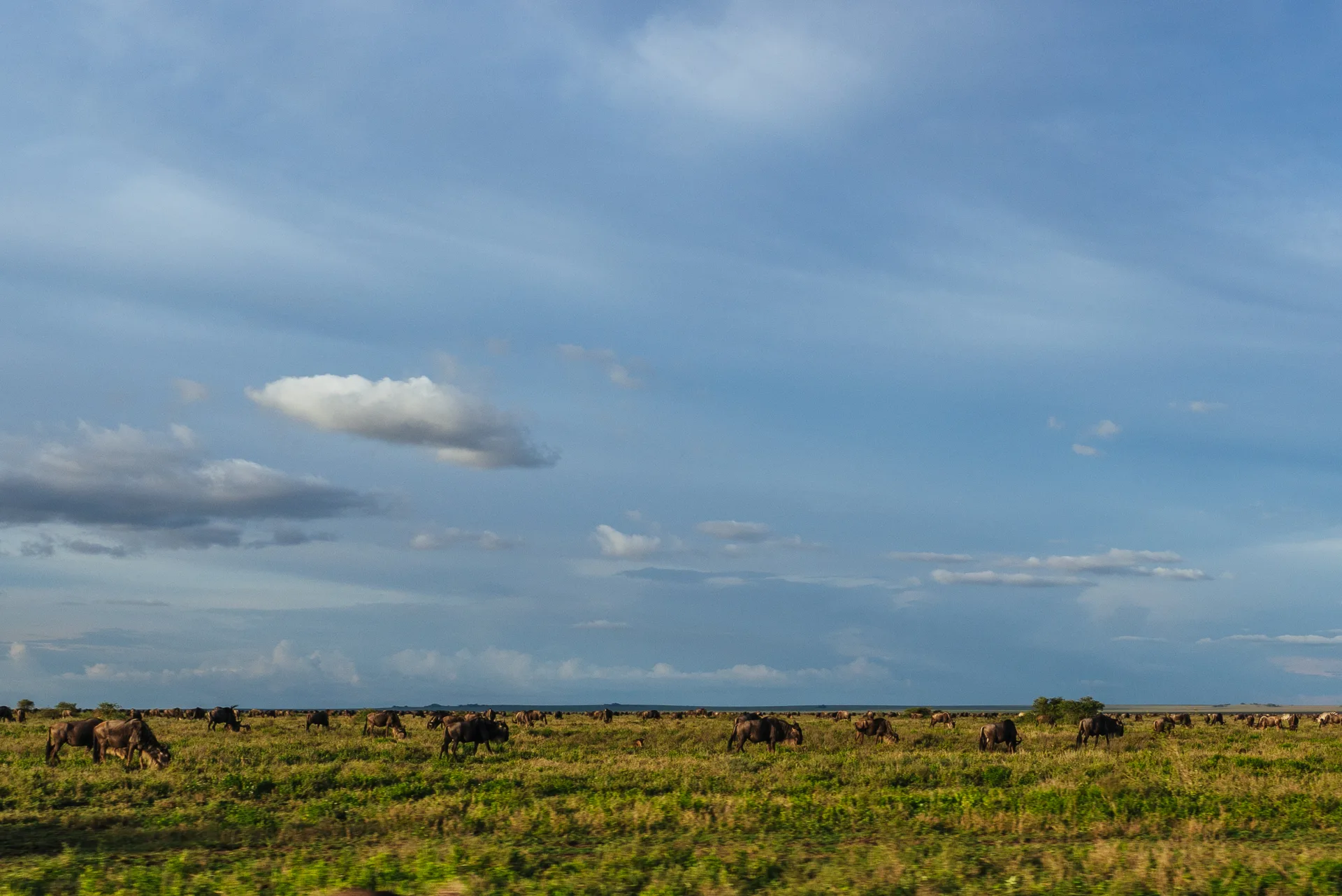
September is the finest month for a Tanzania safari — and the most sought-after time to visit the Serengeti. The Great Migration has reached its northern extreme. Wildebeest herds numbering in the hundreds of thousands are concentrated along a 30-kilometre stretch of the Mara River, and the river crossings — dramatic, chaotic, life-and-death affairs — happen somewhere along the river every morning. For wildlife enthusiasts, it is the most compelling spectacle in Africa.
Why September Is Different From Every Other Month
The Great Migration is a year-round circular movement — but September is when it reaches its climax. The herds have recovered from the calving season (February–March) and the mating period (May), and they are now driven by something more urgent: survival. The grass on the northern plains is their destination, and the Mara River stands between them and it. The crossing is not optional — it is a biological imperative. That urgency is what makes every September crossing so extraordinary.
Beyond the migration, September delivers the full Tanzania safari package: Ngorongoro Crater at its most dramatic (wildlife density peaks as water becomes scarce outside the crater), Tarangire's elephants at their most relaxed, and clear skies that make for perfect photography. There is a reason operators call September "the jewel in the crown."

The Great Migration in September — What You Will Actually See
The migration in September is concentrated almost entirely in the Lamai Wedge and the Mara River corridor in the far north of the Serengeti. Unlike the southern plains where you follow herds across open grassland, September is about the river. Your guide will wake you before dawn and drive to the riverbank, where you will wait — sometimes for an hour, sometimes five — for the herds to gather the courage to cross. Then, suddenly, they go. Thousands of animals plunge into the water simultaneously, creating a churned brown mass of bodies, horns, and splashing. Crocodiles patrol below. Lions watch from the opposite bank. The sound is extraordinary.
Not every crossing is successful — this is nature, red in tooth and claw. But the probability of witnessing at least one significant crossing during a 3-day stay in the northern Serengeti in September is very high. Our guides track the herds' movements daily and position guests based on the previous night's locations.
Wildebeest in Northern Serengeti
900,000+
estimated animals concentrated in the Mara River area
Estimated Daily River Crossings
5–12
major crossing events observed on peak days in September
Weather and Conditions in September
September is deep in Tanzania's dry season, which means excellent conditions across all parks:
- Serengeti: 25–30°C (77–86°F) daytime, clear skies, no rain. Dust is present on unpaved roads but rarely problematic.
- Ngorongoro Crater: 15–22°C (59–72°F) on the crater floor. Rim temperatures can drop to 8–12°C (46–54°F) at sunrise — warm layers are essential for early morning game drives.
- Tarangire: 27–32°C (81–90°F), warm and dry. Elephant herds are concentrated around the Tarangire River, making for reliable sightings.
- Arusha region: 20–26°C (68–79°F), comfortable. Generally pleasant for pre-safari travel.

Where to Go in September — The Optimal Itinerary
September demands a northern itinerary. The southern and central Serengeti are quiet — the wildlife has moved north. Here is the itinerary that makes the most of September conditions:
Day 1–2: Arusha / Kilimanjaro Airport
Arrive at Kilimanjaro International Airport (JRO), typically in the late evening. Overnight at an Arusha lodge — we use a property 20 minutes from town with a quiet garden and reliable hot water. Do not attempt to drive to the Serengeti on arrival day; the distance is real and you will be tired.
Day 3–4: Northern Serengeti — Mara River Crossings
The heart of September. Two full days in the Lamai Wedge and Mara River area with a specialist northern guide. The crossings happen most mornings — your guide will position the vehicle at the best available vantage point. Afternoons are for exploring the Lamai Wedge, a region of rugged hills, rocky outcrops, and exceptional leopard sightings. Accommodation: a permanent tented camp within 30 minutes' drive of the river — comfort and proximity matter when you are waking at 5am.
Day 5: Ngorongoro Crater
Drive south from the Serengeti (approximately 3.5 hours) to the Ngorongoro Crater rim. Descend onto the crater floor in the afternoon when wildlife is most active. The crater's permanent water supply means animals do not need to leave — predator density here is the highest in Africa. Rhino sightings are most likely in September as the crater's rhinos concentrate around the remaining water. Overnight on the rim.
Day 6–7: Tarangire or Lake Manyara
End with a visit to Tarangire National Park — the elephants here are habituated and exceptionally photogenic. The park is less crowded than the Serengeti in September and delivers high-quality sightings in just half a day. Alternatively, Lake Manyara offers flamingo views and a chance to see tree-climbing lions in a compact, scenic setting.
How Much Does a September Safari Cost?
September commands premium pricing — it is the most sought-after month in the Tanzania safari calendar. Here is what to expect:
Mid-Range
$3,500–$4,500
per person, 7 days, 2+ guests
Premium
$5,500–$7,000
per person, 7 days, 2+ guests
Luxury
$8,000+
per person, 7 days, 2+ guests
Park fees are charged at the standard rate year-round: $82.60 per person per 24 hours in the Serengeti, $82.60 in Ngorongoro (plus $295 vehicle fee). These are set by the Tanzania Parks Authority and are not seasonal. International flights from Europe run $700–$1,500 depending on booking lead time and carrier.
Is September Right for You?
September suits you if: you are primarily motivated by the Great Migration and wildlife photography; you want the best chance of seeing river crossings; you can handle peak season pricing; you are comfortable with more vehicles at popular sighting points.
September is less ideal if: you are on a tight budget (shoulder season May or November delivers excellent value); you want a more exclusive, uncrowded experience (consider late October or the green season); you are sensitive to early morning wake-up calls (the crossings wait for no one).

FAQs
Is September a good time for a Tanzania safari?
September is arguably the single best month for a Tanzania safari. The wildebeest are concentrated in the northern Serengeti around the Mara River, meaning river crossings happen daily. Weather is dry and mild, roads are excellent, and wildlife is easy to spot as animals gather around water sources. It is peak season — expect higher prices and more visitors — but the safari quality is unmatched.
Can I see the Great Migration in September?
Yes — September is peak migration season. The herds have moved north from the Grumeti area and are now massed along the Mara River in the northern Serengeti. River crossings happen most mornings, with wildebeest plunging into the river in their thousands while crocodiles wait below and lions line the banks. Your guide will position you at the best crossing points based on the previous day's movements.
What is the weather like in Tanzania in September?
September is dry and mild across Tanzania. In the Serengeti and Ngorongoro, daytime temperatures range from 25–30°C (77–86°F) with clear skies and low humidity. At altitude (Ngorongoro rim), mornings can be cold — 10–15°C (50–59°F) — but warm quickly as the sun rises. No rainfall is expected. The Serengeti's short-grass plains (south) are warmer than the northern Mara River area.
How much does a Tanzania safari in September cost?
September is peak season pricing — expect to pay 20–30% more than shoulder season rates. A 7-day private safari in September runs $3,500–$6,000 per person depending on accommodation tier. Park fees remain constant year-round ($82.60/person/day for Serengeti and Ngorongoro). The premium you pay buys the best wildlife viewing of the year.
What should I pack for a September safari?
September is layered dressing weather: warm days, cold mornings and evenings. Pack neutral-coloured breathable clothing in layers — a light jacket or fleece for early morning game drives, T-shirts for midday. A warm layer is essential for Ngorongoro at sunrise. Binoculars, sunscreen, and a good camera with a zoom lens (200mm minimum) are must-haves.
Ready to Safari in September?
September safaris book 3–6 months in advance. Tell us your travel dates and we will design the optimal northern circuit itinerary.
WhatsApp Us