A photograph freezes a moment. A film inhabits it. When a wildebeest launches itself from a riverbank into the Mara River, a still camera captures the apex of the leap — the tension, the power, the grace. A video camera captures all of that, and everything that came before it, and everything that follows. The gathering momentum on the bank, the hesitation at the water's edge, the chaos of 10,000 animals behind it with nowhere to go but forward. That is why filmmakers come to Tanzania. Not despite the difficulty — because of it.
Tanzania is among the most demanding and rewarding destinations on earth for wildlife filmmaking. The subjects are extraordinary, the light is relentless, and the conditions — dust, heat, rough roads, the logistical challenge of following unpredictable animals — will test every piece of gear you bring and every technique you know. This guide covers how to work within those conditions: what to shoot, how to shoot it, and why Tanzania produces footage that belongs in natural history documentaries.
Snapshot vs. Film: What Your Footage Can Do That Stills Cannot
Still photography is an art of decisions made in advance. You watch, you anticipate, you press the shutter at the decisive moment. Wildlife filmmaking is an art of sustained attention. You are not looking for the moment — you are looking for the sequence. The shot that opens the scene. The shot that builds tension. The cut that releases it.
Tanzania rewards filmmakers who think in sequences rather than moments. A lioness hunting on the Serengeti plains cannot be captured in a single frame — her approach, her acceleration, the chase if it comes, the outcome — these are inherently sequential events. A photograph of any one of those moments is compelling. All of them together, cut together with rhythm and sound, is cinema.
The other dimension that video captures and stills cannot is sound. The dawn chorus of the Serengeti — a distant lion roar answered by another, the gabble of guinea fowl, the sibilant whisper of grass moving in wind that carries the scent of rain — is atmospheric material no photograph can give you. Film that sound, and you have the beginnings of something that transports a viewer from their living room into the scene.
The Technical Shift: Mirrorless Video Modes, Stabilisation, and Audio
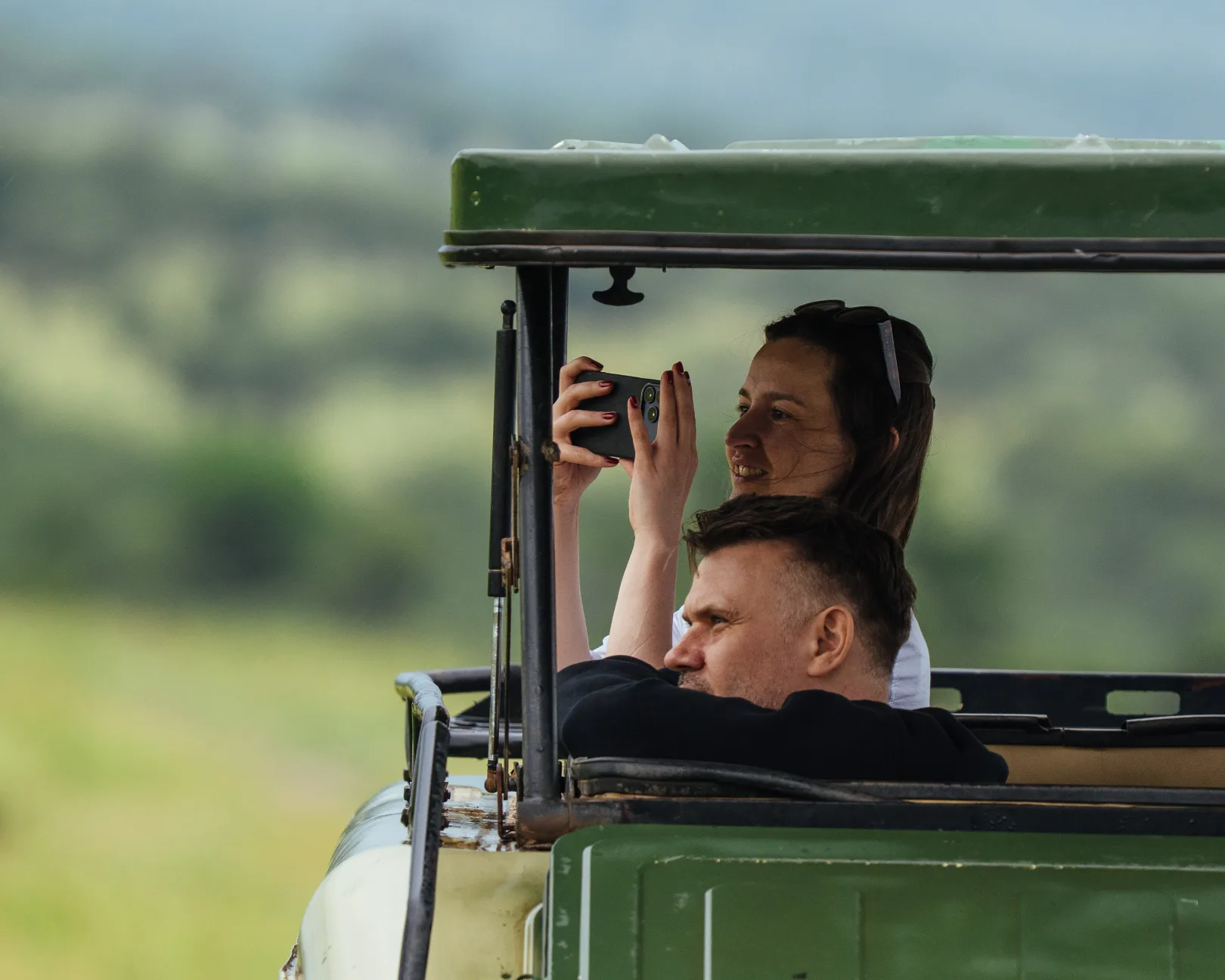
Modern mirrorless cameras have fundamentally changed wildlife filmmaking. A Sony A7S III, Canon R5, or Nikon Z8 can produce broadcast-quality 4K footage with extraordinary low-light performance in a package that fits in a safari daypack. The barrier to professional-quality safari video is lower than it has ever been — the constraint is no longer the equipment.
4K is the minimum. Shoot at 4K (3840 x 2160) even if you plan to deliver in 1080p. The extra resolution gives you cropping flexibility in post — you can reframe a shot, punch into a subject, or stabilise aggressively without degrading the final image. Most modern cameras shoot 4K at 25fps or 30fps without overheating; check your manual for thermal management if shooting in Tanzania's heat.
Picture profiles and Log. Flat picture profiles like Sony's S-Log3, Canon's C-Log, or Nikon's N-Log preserve maximum dynamic range in the footage, giving you latitude to recover highlights and shadows in post-production. If you are new to Log shooting, start with a hybrid Log-Gamma (HLG) profile — it is more forgiving than full Log and still significantly expands your dynamic range compared to a standard profile.
Gimbal vs. handheld. A three-axis gimbal is the single best accessory investment for safari video. From a moving vehicle on rough terrain, even the best in-body stabilisation produces footage with a distinctive bounce and sway that makes extended viewing uncomfortable. A gimbal — the Zhiyun Crane, DJI RS series, or similar — eliminates that bounce and lets you follow a walking elephant herd or a running cheetah with smooth, cinematic pans. For stationary shooting from the vehicle (lion at rest, hippos in a pool), in-body stabilisation is adequate.
Audio. The onboard camera microphone will capture useful reference audio, but it will not capture your subject. A shotgun microphone mounted on the hot shoe — Sennheiser MKE 600, Rode NTG5, or similar — and aimed at your subject through the open roof hatch will dramatically improve dialogue clarity and foreground sound. For ambient audio at a distance, a portable recorder with a parabolic dish (Soundbird, Telinga, or similar) captures clean sound from 50 metres or more.
What Tanzania Produces Best on Film
Some subjects reward still photography more than video. Others are essentially cinematic — they have a narrative quality, a sequence of events, a sound dimension that stills cannot capture. Tanzania is unusually rich in the second category.
Wildebeest River Crossings — The Ultimate Safari Cinema
A river crossing is the closest thing in nature to a choreographed set piece. The build-up — wildebeest massing on the bank, the hesitation, the pressure building as more animals arrive — creates genuine suspense. The crossing itself is unpredictable, chaotic, violent, and extraordinarily difficult to capture in stills because the peak action lasts seconds and the animals are spread across a wide crossing point. On video, at 1/50s shutter angle and 4K resolution with a 600mm equivalent telephoto, you can capture the full sequence from approach to landing to the exhausted scramble up the far bank.
Shoot the far bank. Most filmmakers point at the obvious action — the animals in the water. The far bank is where the drama resolves: the crocodiles, the current, the animals that make it and those that do not. Position your longest lens on that bank and let the rest of the crossing fill the frame in medium shot.
Elephant Family Movement
An elephant herd moving across the Serengeti or Tarangire is one of the most cinematic things you can film in Africa. The scale — a line of animals stretching into the distance — the baby elephants moving in the protective centre of the group, the sound of their movement, the way the matriarch holds the lead and the herd flows behind her like a living river. This is footage that belongs in a BBC natural history series.
Use a wide shot to establish the scale of the herd, then cut to medium shots of individual behaviours, then back to wide. A gimbal is essential here — following a moving elephant herd from a vehicle requires smooth, continuous pans that handheld footage cannot achieve.
Leopard Descending
Leopards spend significant portions of their day in trees, but descending is quick, deliberate, and rarely witnessed. Filming a leopard coming down a marula or acacia tree — the animal's rear feet finding purchase, its weight shifting, the controlled descent — is a rare and compelling piece of behavioural footage that takes patience to capture. Position your vehicle with the light behind you, start rolling before the leopard moves, and stay with it.
Dawn Light Through Acacia
Some of the most evocative wildlife footage shot in Tanzania is not behavioural — it is atmospheric. The columns of golden light that break through Tanzania's iconic flat-topped acacia trees at sunrise transform an ordinary savanna scene into something painterly. Shoot these with a wide-angle lens (24mm or wider equivalent) to capture both the tree and the full cone of light, using a ND filter to keep the aperture open for shallow depth of field even in bright morning light.
Editing Mindset: From Raw Footage to a 90-Second Highlight Reel
The most common mistake made by first-time safari filmmakers is returning with hours of footage and never editing it. The discipline of the highlight reel — finding 90 seconds of your best footage and telling a story with them — forces you to think like an editor from the first shot you take.
Lightroom and DaVinci Resolve. Colour-grade your footage in DaVinci Resolve (the free version is professional-grade). Apply a gentle LUT for your camera's Log profile, then refine exposure and white balance shot by shot. Import your selects into the timeline with music — royalty-free options like Epidemic Sound or Artlist work well for wildlife — and begin cutting. Do not aim for a chronological account of your safari. Aim for a mood: the tension of the crossings, the intimacy of close encounters, the vastness of the landscape.
Avoiding the vacation slideshow. The telltale sign of safari footage that has not been edited with intention is the "and then, and then, and then" structure: five minutes of a lion walking, five minutes of elephants at a waterhole, five minutes of a giraffe eating. This is a slideshow, not a film. The edit is where your footage becomes something. Cut ruthlessly: a three-second shot that is perfectly composed and perfectly timed is worth more than thirty seconds of decent material.
Shoot for a narrative, not a catalogue. Before you start shooting each day, think about what story you are trying to tell. Is it about the scale of the migration? The intimacy of a morning encounter? The quality of the light? This focus will inform your shot selection and dramatically improve the coherence of your final edit.
The Ethical Dimension: Filmmaking Changes How You Relate to Wildlife
Here is something experienced safari filmmakers will tell you: video changes your relationship with wildlife. When you are committed to capturing a behaviour — waiting for the leopard to descend, positioning for the crossing build-up — you stop hunting moments and start waiting for stories. This shift, from opportunistic shooting to patient observation, is not just a technical improvement. It is a different way of being in the bush.
The filmmaker who waits for the full sequence, who holds their shot through the boring middle minutes because they know the payoff is coming, who stays at a sighting rather than driving to the next attraction — that filmmaker comes home with better footage, and they also come home having seen more. The camera becomes a reason to pay attention rather than a reason to move on.
Tanzania's wildlife is habituated to safari vehicles, and ethical filmmaking means keeping appropriate distance, never attempting to provoke a behaviour, and following your guide's lead on positioning. The best footage is always achieved with patience and fieldcraft — not by getting closer than the animals are comfortable with.
Frequently Asked Questions
What camera settings should I use for wildlife video in Tanzania?
Set your mirrorless or DSLR to 4K at 25fps (or 30fps) in a flat picture profile like Log or HLG to preserve highlight and shadow detail. Use a shutter angle of 180 degrees — that means your shutter speed is double your frame rate, so 1/50s for 25fps or 1/60s for 30fps. Keep ISO as low as possible and rely on your lens's maximum aperture. Pair this with continuous autofocus with animal-eye tracking if your camera supports it.
Do I need a gimbal for safari video, or is in-body stabilisation enough?
A gimbal is the single best investment for safari video if you plan to shoot while moving — following a walking elephant family, tracking a lion pride across the plains. Modern in-body image stabilisation (IBIS) is exceptional for stationary shooting from a vehicle, but a three-axis gimbal eliminates the bounce and sway that makes footage unwatchable. For a mirrorless setup, a compact gimbal rated for 1.5kg or above handles most telephoto lenses comfortably.
How do I record good wildlife sound on safari?
Wildlife sound is half your film. Use a directional shotgun microphone mounted on the camera's hot shoe and aimed at your subject, plus a separate portable recorder with a parabola dish for cleaner ambient sound from a distance. In the vehicle, position the mic near the open window, away from the engine. The dawn chorus of a Serengeti morning — birdsong, distant lion roars, the sound of a herd moving through tall grass — is some of the finest ambient audio in natural history filmmaking.
What's the best Tanzania safari footage to capture?
Wildebeest river crossings are the ultimate safari video subject: they are essentially uncomposable in stills. A crossing is pure cinema — the buildup tension, the chaos of the moment, the crocodile action, the exhausted animals pulling themselves onto the far bank. Beyond crossings: elephant family movement (the way a herd flows through landscape is inherently cinematic), leopard descent from a tree, and dawn light columns through acacia canopy. Shoot these at golden hour in 4K and you have footage that no photograph can replicate.
Should I shoot for a highlight reel or a long documentary on safari?
Aim for a 90-second highlight reel. This constraint forces ruthless creative decisions — it forces you to think narratively, to find the best moments, to edit with purpose. Three hours of unedited footage is a vacation souvenir. Ninety seconds of carefully selected, well-edited sequences is a film. If you return with 20 minutes of exceptional clips, you have the raw material for something remarkable; the highlight reel is how you learn to see which 90 seconds those are.
Start Planning
Ready to Film Your Safari?
We design safari itineraries around the experiences you want to capture — from river crossing positioning to golden-hour landscape sequences. Talk to us about your filmmaking goals.
WhatsApp Us