
Tanzania hosts the largest wildlife concentrations in Africa — over 1.5 million wildebeest, 250,000 zebras, massive elephant populations in Tarangire and Ruaha, and the highest lion density on the continent. What you see depends enormously on when you go. This calendar tells you what wildlife is doing each month, which parks are at their best, and when to catch the most dramatic wildlife spectacles of 2026.

Tanzania's Wildlife Seasons at a Glance
Tanzania has two primary seasons shaped by its rainfall patterns. The long dry season (June–October) is the classic safari season — wildlife concentrates around water, animals are easier to spot, and the Great Migration reaches its most dramatic phases. The wet season (November–May) is divided into the short rains (November–December) and long rains (March–May) — landscapes are green, birding peaks, prices drop, and the calving season delivers extraordinary predator-prey interactions.
The common misconception is that the dry season is the only time for wildlife viewing. In reality, every month in Tanzania offers world-class sightings — you are simply trading one kind of spectacle for another.

January — Calving Season, Southeastern Plains
January is the start of one of the most emotionally rich wildlife experiences in Africa: wildebeest calving season on the southeastern Serengeti and Ndutu plains. The first calves appear, and within weeks 8,000 calves are born every day. The concentration of vulnerable newborns draws one of the highest predator densities in Africa — lions, cheetahs, hyenas, and jackals follow the herds.
The southern Serengeti and Ngorongoro Conservation Area are the centre of action. Flamingos nest on Lake Ndutu. Elephants move through the Gol Mountains. Tarangire is excellent — its river systems hold wildlife well while other water sources dry up. The weather is warm and dry, the roads are good, and this is peak season pricing — but the calving spectacle justifies it.
February — Peak Predator Action
February is the most intense wildlife month in Tanzania. The wildebeest calving reaches its apex — approximately 8,000 calves born every 24 hours — and predator action is extraordinary. Lions hunting in the golden grass. Cheetahs using the short-cropped plains to chase down gazelles. Hyena clans working the edges of the herds. It is raw, unscripted wildlife drama at its most concentrated.
February also brings migratory birds from Europe — the first of the Palaearctic migrants arrive, joining Tanzania's 1,100 resident and migrant species. Lake Manyara's famous flamingo congregations are at their most vivid. Ngorongoro Crater is excellent — wildlife remains concentrated on the floor due to permanent water, and the crater's lions are resident year-round.
March — The Green Season Begins
March marks the start of the long rains, and Tanzania transforms. The parched golden landscapes of the dry season turn emerald. Migratory birds continue arriving. Antelope species — topi, gazelles, impala — begin giving birth, attracting predators in turn. The birding is exceptional, with many species in breeding plumage.
The trade-off: some roads become difficult after heavy rain, and wildlife is more dispersed than in the dry season. But the landscapes are staggeringly beautiful, the parks are nearly empty, and prices are at their lowest. For photographers and birders, March is one of the finest months to visit. Tarangire remains a reliable constant — its river and swamp systems hold wildlife regardless of season.

April — Emerald Safari at Its Quietest
April is Tanzania's best-kept safari secret. The long rains are in full swing, the landscapes are extraordinary, and the parks are at their quietest. Birding reaches its annual peak — over 550 species present, many in vivid breeding plumage. Migratory birds from Europe and North Africa are in residence. Wetland areas across Tarangire, Serengeti, and Lake Manyara teem with waterbirds.
Wildebeest are dispersed across the western and central Serengeti — not in the dense concentrations of the dry season, but moving in large herds nonetheless. Predators follow the herds. April prices are dramatically lower than peak season, and many lodges offer exceptional deals. The one caveat: some secondary roads in the Serengeti and Southern Circuit can become impassable after heavy rain. Your operator's knowledge of current conditions is essential.
May — Dramatic Landscapes, Herds Moving North
May is the last month of the long rains, and the landscape is at its most lush. The southern and eastern Serengeti remain green. The first major movement of the wildebeest migration begins — the herds start their long northwestward journey from the southeastern plains toward the western corridor. Birding remains excellent. Elephant activity in Tarangire begins to increase as the river becomes a critical water source.
From a wildlife perspective, May is transitional — the dramatic concentrated herds of the dry season have not yet formed, but the green-season birding and predator action continue. For our guides, May is one of the most beautiful months to work — the light is extraordinary, the landscapes are vivid, and the absence of vehicles means a truly private safari experience.
June — Dry Season Begins, Herds Reach the Western Corridor
June marks the start of the long dry season and the migration enters its western corridor phase. The herds push northwest through the Serengeti, following the Grumeti River. Tarangire's elephant population surges — up to 3,000 elephants gather along the river as other water sources dry up. Ngorongoro Crater is at its finest — wildlife density on the crater floor is extraordinary, and the 25,000+ large mammals resident there are easy to view.
June is one of our favourite months — the wildlife concentration of the dry season is building, the landscapes are still showing some green from the recent rains, the parks are not yet at peak crowding, and prices have not reached their July-August maximum. It is a two-for-one window: good general wildlife plus the beginning of the migration's most dramatic phase.
July — Mara River Crossings Begin
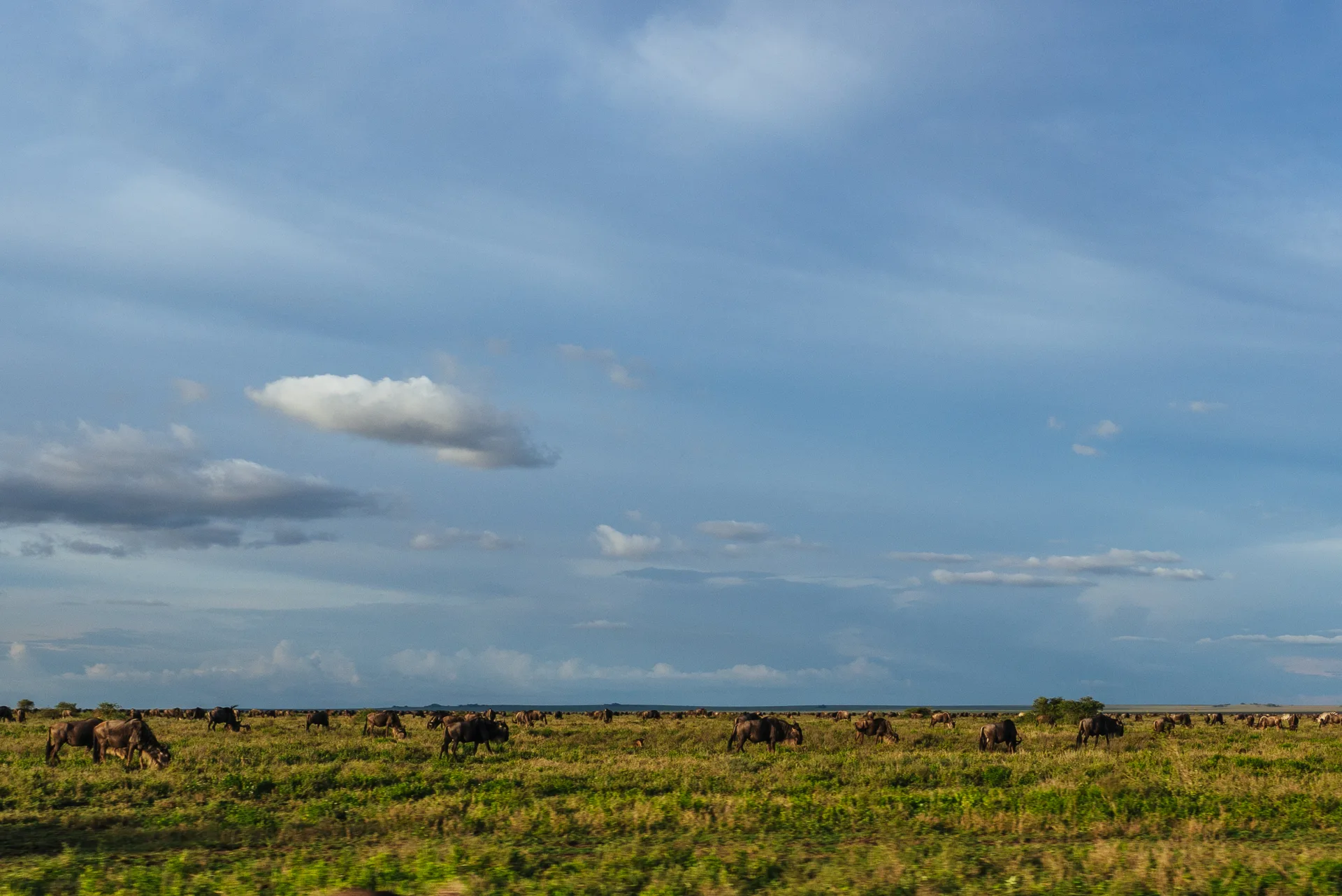
July is the month that defines Tanzania in most safari travellers' imaginations. The wildebeest reach the Mara River — the northern boundary of the Serengeti — and the river crossings begin in earnest. The Mara is deeper, faster, and more crocodile-infested than the Grumeti. The crossings are unpredictable, dramatic, and among the most spectacular wildlife events on earth.
Outside the migration, July is peak season across all of Tanzania's parks. Ngorongoro Crater is extraordinary — the floor teems with wildlife. Lions on the Serengeti plains are hunting Thomson's gazelles and zebras. Tarangire's elephants are at their most concentrated. The Southern Circuit (Ruaha, Selous) is also excellent at this time — rivers and waterholes draw wildlife consistently.
July and August are the most expensive months in the Tanzania safari calendar. Premium northern Serengeti camps book 4-6 months in advance. If July is your target, plan and book early.
August — The Peak Wildlife Month
August is the apex of Tanzania's wildlife calendar. The Mara River crossings are at their most frequent. The Serengeti's northern reaches host hundreds of thousands of wildebeest and zebras. Lions are hunting exhausted animals as they emerge from the river. Crocodiles wait below. Hyenas follow every crossing. It is the most wildlife-dense spectacle in Africa.
Ngorongoro Crater in August is remarkable — the floor is dry, the wildlife is concentrated around a diminishing lake and two key waterholes, and the Big Five sightings are as reliable as anywhere in Africa. Tarangire continues to draw massive elephant herds. The tradeoff: this is peak season — highest prices, most vehicles in the park, most competitive booking environment. A great operator who knows the less-visited areas of the northern Serengeti can still deliver an exceptional experience.
September — Final Crossings, Herds Turn South
September sees the final Mara River crossings as the herds begin their long journey back south. The timing varies by year — in some years crossings continue through mid-September; in others, the last major crossings happen in early September. After the crossings, the herds spend October moving back through the central Serengeti.
September is our most underrated month. The wildlife spectacle is still extraordinary — you may catch the tail end of crossings or the beginning of the return journey. But the crowds of July and August have thinned, prices are dropping from their peak, and the light on the Serengeti plains is at its most beautiful. A September safari delivers 90% of the drama at 70% of the cost and crowding.
October — The Return South, Cheetah Season
October finds the migration herds spread across the central and eastern Serengeti as they move south toward the short-grass plains. Cheetah activity in the southeastern Serengeti is exceptional — the open grasslands make hunting visible, and the cheetah population in this area is one of the densest in Africa. Zebras are in their final phase of foaling.
October is also when the short rains typically begin, and the first green flush appears on the southeastern plains. The landscapes begin their transformation toward the emerald that will define November and December. Tarangire remains excellent — the elephant herds have not yet reached their dry-season peak but the park's permanent water sources draw consistent wildlife. Ngorongoro is strong year-round.

November — Short Rains Begin, Calving Season Approaches
November is the start of the second rainy season — the short rains — and Tanzania begins its transformation again. The landscapes that were golden and dry in October turn green. Wildebeest herds are moving into the southeastern Serengeti and the Ndutu area, preparing for the next calving season. The birding remains excellent as the last of the migratory birds from the northern hemisphere are still present.
November is shoulder season pricing — significantly lower than peak, with many lodges offering exceptional value. The short rains typically do not disrupt safari activities — afternoon thundershowers are the norm, mornings and game drives are usually clear. The parks are uncrowded, the landscapes are beautiful, and the calving season that will define December and January is only weeks away.
December — Cycle Begins Again, Family Safari Season
December marks the return of the migration to the southeastern Serengeti and the calving season begins again. The first wildebeest calves of the new season appear. The landscapes are green and lush. December is peak season for family safari travellers due to school holidays — the parks are busier and prices are higher, but the combination of newborn wildlife, green landscapes, and the Christmas/New Year holiday atmosphere makes it magical.
The Southern Circuit (Selous, Ruaha, Katavi, Mahale) is excellent in December — the long dry season has ended, water is returning to the parks, and wildlife is dispersing from concentrated dry-season positions. These remote parks are increasingly popular with travellers who want to escape the crowds of the Northern Circuit while still seeing exceptional wildlife.
Tanzania Wildlife Calendar — At a Glance
| Month | Top Wildlife | Best Parks | Crowds / Cost |
|---|---|---|---|
| January | Wildebeest calving, lions, cheetahs | Serengeti south, Ndutu, Ngorongoro | High / High |
| February | Peak calving, predator action, flamingos | Serengeti south, Lake Manyara | High / High |
| March | Birding peak, green landscapes | Tarangire, all parks | Low / Low |
| April | Birding peak, newborns, emerald landscapes | Tarangire, Southern Circuit | Very Low / Very Low |
| May | Herds moving, birds, elephant activity | Serengeti west, Tarangire | Low / Low-Med |
| June | Grumeti crossings, elephants, Ngorongoro | Serengeti west, Tarangire, Ngorongoro | Med / Med-High |
| July | Mara crossings begin, all wildlife peak | Serengeti north, all Northern Circuit | Very High / Very High |
| August | Peak crossings, highest wildlife density | Serengeti north, Ngorongoro | Very High / Very High |
| September | Final crossings, return journey begins | Serengeti north/central | High / High-Med |
| October | Cheetahs, return south, short rains begin | Serengeti east/central | Med / Med |
| November | Short rains, green season, calving approaches | Serengeti south, Ndutu, Tarangire | Low / Low |
| December | Calving begins, green landscapes, family season | Serengeti south, Southern Circuit | High / High |
FAQs
What is the best month to see the Big Five in Tanzania?
June through October is the dry season — wildlife concentrates around water sources, making animals easier to spot. July through September is optimal for the Northern Circuit (Serengeti, Ngorongoro) as animals are most concentrated. For the Southern Circuit (Selous, Ruaha), June through October is equally strong. February is excellent for predator action in the southeastern Serengeti as lions and cheetahs follow the calving wildebeest.
When is the best time to see elephants in Tanzania?
Tanzania has two elephant-viewing peak seasons. In the Northern Circuit (Serengeti, Ngorongoro, Tarangire), the dry season from June to October is best — elephants cluster around rivers and watering holes. In the Southern Circuit (Selous, Ruaha), elephants are viewable year-round but the dry season from June to October is optimal. Tarangire National Park is famous for its massive elephant herds, particularly from June through November when up to 3,000 elephants gather around the Tarangire River.
Can you see the Great Migration year-round?
The Great Migration is a year-round circular movement. While the famous Mara River crossings happen July through September, calving season runs January through February on the southeastern Serengeti plains. From April through June, the herds move through the western corridor. No matter when you visit, you can witness some phase of the migration — the herds are always moving.
What is the best time for birding in Tanzania?
November through April is the wet season, which is peak birding season. This is when migratory birds from Europe and North Africa arrive (over 350 species), and resident birds are in breeding plumage. The wetlands of Lake Manyara, Tarangire, and the Serengeti's northern reaches are particularly rich. Tanzania has 1,100+ bird species — the third highest count of any African country.
Is Tanzania good for wildlife viewing in the green season (April-May)?
April and May offer exceptional wildlife viewing at significantly lower prices. The landscapes are emerald, many antelope species give birth (attracting predators), and birding is at its peak. The trade-off is that some roads become difficult after rain and wildlife is more dispersed. For photographers and birders who do not need to see the Great Migration in its most dramatic concentrated form, the green season is one of Tanzania's best-kept secrets.
What wildlife is unique to Tanzania that visitors rarely see elsewhere?
Tanzania holds populations of species found nowhere else in such numbers: the Selous' wild dog packs (largest surviving population in Africa), Ruaha's elephant herds, the critically endangered African wild dog, and the unusual gerenuk and lesser kudu of the arid northern parks. Tanzania also has the largest lion population of any country in Africa, concentrated particularly in the Serengeti-Ngorongoro ecosystem.
Plan Your Wildlife Safari Around the Calendar
Our guides have spent 48 years reading Tanzania's wildlife calendar. Tell us what you came to see and we will tell you the best month to come.
WhatsApp Us